
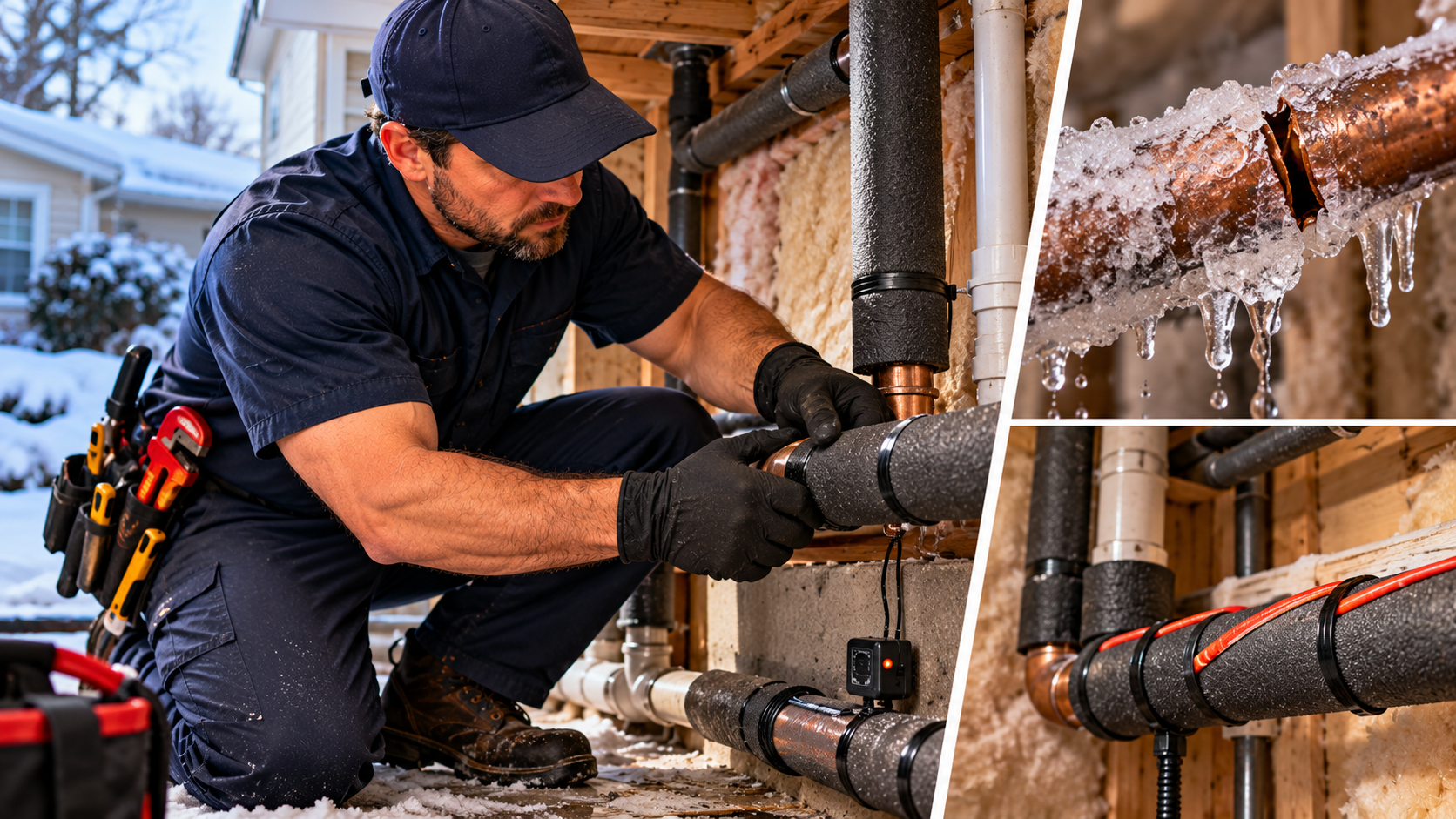
The Silent Threat of North Carolina Winter Cold Snaps
Every winter, Greensboro homeowners experience sudden sub-freezing temperatures dropping into the teens. When water freezes inside a copper or PVC pipe, it expands by approximately 9% in volume. This expansion generates intense hydrostatic pressure—up to 2,000 PSI—trapped between the ice blockage and the closed faucet.
Without warning, the pipe wall splits open. Once temperatures rise above 32°F and the ice thaws, thousands of gallons of water can flood crawl spaces, ruin sheetrock, and destroy floorboards within minutes.
1. Identify Vulnerable Plumbing Zones in Your Home
Most homes in Guilford County built on crawl space foundations or with unheated garages contain exposed water lines. Primary risk areas include:
- Crawl Spaces: Main supply lines running along floor joists near foundation vents.
- Exterior Wall Kitchen & Bath Sinks: Supply lines tucked inside uninsulated exterior wall cavities.
- Outdoor Hose Bibbs: Standard non-frost-free spigots left with hoses connected.
- Attics & Garages: Fire sprinkler lines or secondary water heaters installed in unheated spaces.
2. Essential Pre-Winter Maintenance Checklist
- Disconnect All Outdoor Hoses: Trapped water inside a connected hose freezes back into the spigot valve body, causing it to split inside your basement wall.
- Close Crawl Space Foundation Vents: Blocking freezing winter wind cuts crawl space draft temperatures dramatically.
- Insulate Exposed Piping: Install pre-slit polyethylene foam pipe insulation sleeves over all exposed hot and cold lines.
- Install Frost-Free Hose Bibbs: Upgrade old brass outdoor faucets to self-draining frost-free silcocks.
3. What to Do During an Extreme Freeze Warning
When the Greensboro weather forecast calls for night temperatures below 25°F, leave a trickle of cold water dripping from the faucet located furthest from your main water meter. Running water moves constantly and resists freezing far better than static water trapped under pressure.