Understanding Mineral Content in Greensboro Municipal Water
Water supplied across Greensboro and surrounding Guilford County towns contains dissolved minerals including calcium carbonate and magnesium. While safe to drink, when hard water is heated above 120°F, these minerals precipitate out of solution and form hard, chalky white limescale crusts.
The Impact on High-Efficiency Tankless Units
Modern tankless water heaters rely on ultra-compact copper or stainless steel heat exchangers. Limescale acts as a thermal insulator. Just 1/16th of an inch of mineral scale buildup reduces thermal conductivity by up to 15%, forcing the unit to burn significantly more gas or electricity to heat water.
Left unserviced for 2-3 years, hard water buildup can overheat copper heat exchanger walls, leading to pinhole cracks, internal water leakage, and expensive control board failures.
Signs Your Home Has High Mineral Scale
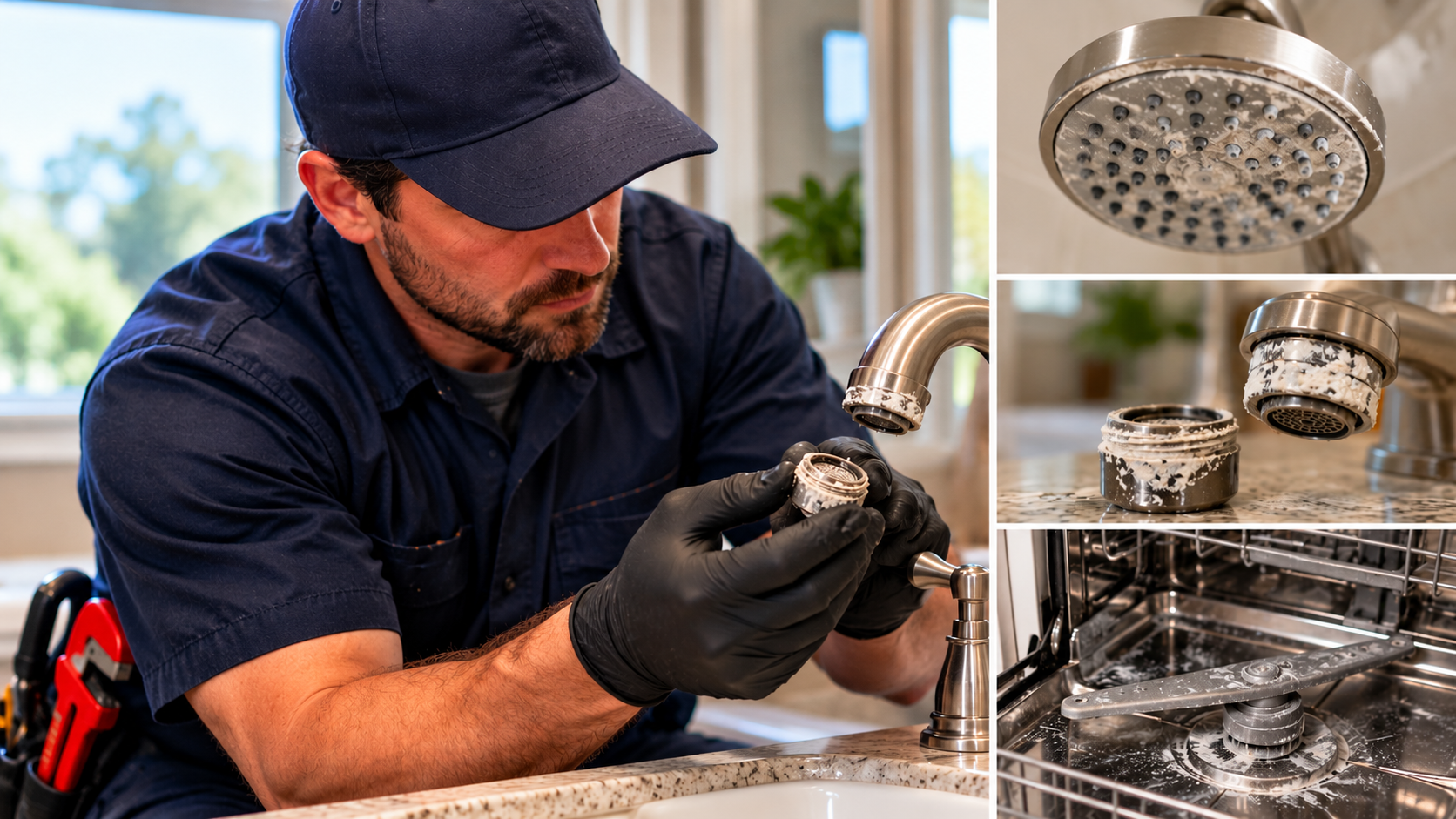
- White crusty buildup around faucet aerators, showerheads, and dishwashers.
- Soap scum that requires scrubbing on glass shower doors.
- Water heater making popping or sizzling noises when firing.
- Reduced hot water pressure compared to cold water pressure.
How Annual Descaling Saves Thousands
A professional descaling service uses food-grade citric or acetic acid solutions pumped continuously through your tankless heat exchanger for 45 minutes. This safely dissolves 100% of mineral deposits without corroding internal valves.